tea residency
creators
perspectives
gatherings
discoveries
Inviting different ways of seeing, sharing, and experiencing tea
Nari Tea Residency is an ongoing program inviting tea practitioners and creatives from different fields to bring their own perspectives, knowledge, and ways of working into the field of tea.
Throughout the year, selected residents shape a series of gatherings at Nari — from tastings, workshops, talks and creative sessions to tea parties and other formats.
By bringing different people and approaches together, the program opens tea beyond a single tradition or point of view, creating space for more meaningful discoveries, conversations, and shared experiences.
upcoming residents
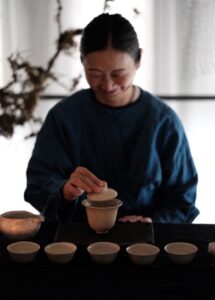
ICHIKO HORIGUCHI (JP)
Sep 2026
Bio
Ichiko Horiguchi 堀口一子 is a tea practitioner of 茶絲道 (Cha-su-ru). Rooted in Chinese tea, she has spent more than two decades studying and practicing across the tea cultures of China, Taiwan, and Japan, organizing tea gatherings, classes, and collaborative projects along the way. Her teaching and tea practice have taken her across Japan and into China and Hong Kong, from tea gatherings at Kyoto Art Center and Mii-dera to curating the 茶絲道 exhibition in Hangzhou, alongside continued research journeys through Taiwan and Yunnan. Her natural tea research deepened after encountering old native tea trees growing in and around Mii-dera temple in Shiga, where she began harvesting the leaves and making tea using techniques informed by her study of Chinese tea. This relationship with the temple has since developed alongside a deepening study of tea and Buddhism. Through 茶絲道, she continues to explore the possibilities of tea across culture, place, and everyday life.
SEIREN Exhibition Opening Tea Ceremony
To open the SEIREN 靜練 exhibition by another resident Raphaella Wu, Ichiko Horiguchi will host a tea gathering shaped by travel, memory, and the connections between Taiwan and Japan.
The selection will include Taiwanese teas, among them Oriental Beauty, recalling the journey Ichiko and Raphaella made through Taiwan last year, alongside old native tree tea made by Ichiko from Mii-dera Temple in Shiga — a place closely connected to her ongoing study of tea, nature, and Buddhist culture.
Accompanied by Taiwanese tea snacks, the gathering offers an entry way to the stories and journeys behind SEIREN through tea and conversation.
Meditative Tea Ceremony
In this more contemplative gathering, Ichiko Horiguchi invites participants to experience her signature 茶絲道 (Cha-su-ru) through tea she has made from a small native tea tree garden growing in and around Mii-dera Temple in Shiga.
The session will include a guided meditation by Ichiko, followed by three teas. Drawing from her long relationship with Mii-dera Temple, the gathering creates space to attend closely to aroma, taste, texture, and the sensations that unfold through drinking.
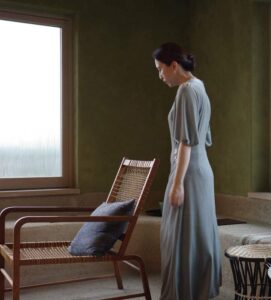
Raphaella Wu (tw)
Sep 2026
Bio
Based between Taiwan and Kyoto, Raphaella Wu’s work grows from an interest in textiles and craft.
Through travel, she visits textile regions and makers, learning about local materials and techniques and bringing these encounters into her projects and exhibitions.
SEIREN 靜練 Exhibition
SEIREN 靜練 is an ongoing project by Raphaella Wu, exploring textiles, craft, and the relationships that emerge through travel and encounters with artisans. The name SEIREN also echoes the Japanese term 精練 — the process through which cloth is refined and prepared.
Each textile arrives with a history of its own. Banshu-ori from Hyogo, shaped through a long tradition of clothing and everyday use, carries the softness and lightness of cotton. Damask textiles from Fukui, by contrast, emerged from a different relationship between cloth, craft, and space — appearing in tea settings, tea utensils, and scroll mountings, where sheen, shadow, texture, and the movement of light across the surface become part of how the fabric is experienced.
Although both are textiles, their atmosphere and presence differ greatly depending on the land and purpose from which they emerged.
When these textiles take the form of shoes, they enter another life: no longer only something to be seen, but something worn, moved with, and carried from place to place. The form changes, while traces and memories of where the cloth comes from remain.
First presented in Kyoto, SEIREN 靜練 now continues its journey to Helsinki.
The textiles are encountered through travel, and through shoes, they begin to travel again.
Past residents

GATSBY (FIN)
march 2026
Bio
After ten years exploring tea in Fujian, China, Gatsby has been back in Helsinki guiding people in the quiet arts of flavour and scent. Part lecturer, part explorer, she is in a unique position to bring the essence of tea closer to us all. Tea is her daily language, and her enthusiasm for tea is contagious, as you will soon find out!
The Art of Tea and Inspiration
A sensory workshop exploring tea as a source of inspiration. Through selected tea-related works, shared tea, writing, drawing, and observation, participants considered how tea has accompanied creative practices in the past — and how attentive tasting might open new pathways for inspiration today.
Tasting Tea Together
A playful social tasting exploring how differently we experience the same tea. Guided tasting games encouraged participants to follow flavours into personal associations and unexpected impressions, turning tea into a space for curiosity, conversation, and shared perception.
Tea in Silence
A small tea retreat centred on rare teas and an extended period of shared silence. Without introductions to the teas, participants were invited to experience each cup with attention while observing thoughts and sensations as they arose — allowing tea to become a catalyst for reflection and inward awareness.

Masaki Murata (JP)
July 2025
Bio
Tap dancer / artist
He began street dancing in high school. At the age of 24, he encountered tap dance in his hometown of Sendai and began training under Masaru Sato. He later moved to Tokyo to study with Kazunori Kumagai. From 2006 to 2017, he was an active member of Kaz Tap Company. Since then, he has been performing as a solo tap dancer.
Currently, he collaborates with artists from various genres, including contemporary dance, theater, and visual arts. At the same time, he continues to develop solo works rooted in tap dance, drawing inspiration from fragments of daily life. Through imaginative expression and interdisciplinary approaches, he creates a unique and personal world on stage.
He received the Award for Excellence in the Solo Category at the SAI Dance Festival 2019 and has been invited multiple times to perform internationally through the Fukuoka Dance Fringe Festival. He is also a certified artist of the 19th “Heaven Artist” program by the Tokyo Metropolitan Government.
In 2024, he won the Adelaide Fringe Weekly Award – Best Dance at the Adelaide Fringe Festival, and received the Best Show 2024 award at the Newcastle Fringe Festival.
Dance Performance - Twilight Tap
Born from the tension between rhythm and stillness, Twilight Tap is the solo performance of Japanese artist and tap dancer Masaki Murata, also known as @muratap. Murata’s practice explores how tap can become powerful, yet restrained, and emotionally charged. Through silence, repetition, and the subtle weight of gesture, his performance evokes the in-between states: dusk and dawn, memory and presence, movement and pause.
Awarded Best Dance at the 2024 Adelaide Fringe Festival, Twilight Tap has since toured internationally and will now land in Helsinki for one intimate showing only. For the can’t miss show we’ve curated a full program of complimentary experiences!
CHATAPMUSIC Impovised
A live improvisational gathering at Nari, created in collaboration with musician Patrick Chang and tea practitioner Uyo Takahiro. Through tea, sound, and movement, the session became a cross-disciplinary exchange between residents and local participants, where everything unfolded in real time and took shape through collective presence.
➝ Archive Images